Creating an inclusive workplace does not happen by chance. It begins with thoughtful HR policies that reflect fairness, respect, and equal opportunities for every employee. When you build policies with inclusion in mind, you create an environment where people from different backgrounds feel welcomed and valued.
"Inclusivity is not a standalone initiative but a business imperative," says Cate Prescott, discussing how organizations should embed inclusion into their people strategy rather than considering it a separate program. The interview emphasizes integrating inclusion across talent development, workplace culture, and leadership practices.
When your policies are designed to support diverse employee needs, you create a workplace where people feel confident bringing their authentic selves to work. This article explores how you can develop HR policies that actively promote inclusion and support long-term organizational success.
Build Inclusive Hiring Processes
The foundation of an inclusive hiring process lies in thoroughly reviewing each stage of your recruitment strategy. According to Youth Employment UK, a growing number of companies and organizations are prioritizing diversity, equity, and inclusion in their operations. However, setting up inclusive hiring processes requires a strategic approach, which begins with understanding what inclusivity actually means.
Next, create job descriptions that use clear, unbiased language and focus on the skills and qualifications that matter for the role. Structured interviews and standardized evaluation criteria can reduce unconscious bias and support fair decision-making throughout the selection process. When your hiring practices are inclusive, you send a strong message that every candidate will be evaluated fairly and respectfully.
Make your application process accessible by offering reasonable accommodations and removing unnecessary barriers that could discourage qualified applicants. Establishing inclusive hiring policies does more than fortify your talent pipeline. It also significantly enhances the diversity of your workplace. This sets the stage for a company culture where every employee feels welcomed, appreciated, and empowered to thrive.
Establish Flexible Work Policies
Flexible work policies are essential for cultivating an inclusive workplace. Forbes reports on a survey revealing that 83 percent of Americans value flexible working hours. Plus, around 74 percent think that having the option to work from different locations is nearly as vital. Each employee brings their own personal responsibilities, preferred working styles, and specific accessibility needs to the table.
You can support a wider range of employees by offering options such as hybrid schedules, flexible working hours, or adjusted shifts whenever possible. These policies help employees balance their professional and personal commitments. They also reduce unnecessary stress and improve overall job satisfaction.
Designing flexible work policies with fairness and accessibility at the forefront creates a space where more individuals can excel. It allows employees to have a say in how they work. Moreover, it builds trust, enhances engagement, and signals that your organization values each person's unique needs. Above all, it helps maintain productivity while nurturing an inclusive culture.
Support Women Employees
Supporting women employees through thoughtful HR policies helps you build a workplace where everyone has an equal opportunity to succeed. You can promote inclusion by ensuring equal pay for equal work, providing fair promotion opportunities, and maintaining transparent performance evaluation processes. Having solid safety policies is essential for a culture where they feel valued at every stage of their careers.
You can boost inclusion by providing flexible work hours, childcare support, and maternity leave. These help women manage their work commitments alongside their personal lives. Women sometimes push family planning ahead due to poor policies at work. Many even consider birth control methods that may not be safe. The Depo shot lawsuit against its manufacturer, Pfizer, highlights the risks of this birth control method.
According to TorHoerman Law, individuals have been diagnosed with a brain tumor following long-term use of the Depo-Provera contraceptive injection. Women often overlook such risks because they are worried about their careers. Employers that offer supportive benefits and a respectful workplace enable women to make decisions that are right for them. It can build greater trust and long-term employee satisfaction.
Train Managers on Inclusive Leadership
Teaching managers about inclusive leadership plays a key role in shaping HR policies that encourage a culture of inclusion. Equip leaders with the knowledge and skills to recognize unconscious bias, communicate respectfully, and make fair decisions that support every employee. Regular training sessions on diversity, equity, accessibility, and cultural awareness help managers create a workplace where everyone feels respected.
SHRM states that inclusive leadership fosters a culture of fairness, emphasizing practices such as open decision-making. It means every voice is heard before any decisions are finalized. When organizations encourage their leaders to embrace inclusive behaviors, managers can create spaces where teams flourish. They set a positive example that encourages collaboration, trust, and accountability across the organization.
Also, provide managers with practical tools to handle conflicts fairly, support diverse teams, and encourage open communication. Ongoing coaching and performance assessments can reinforce inclusive leadership practices. Inclusive managers play a key role in turning HR policies into meaningful workplace experiences that benefit every employee.
FAQs
Why does organizational culture matter?
Organizational culture matters because it shapes how you work, communicate, and collaborate every day. A positive culture builds trust, encourages inclusion, improves employee engagement, and supports better decision-making. When people feel respected and valued, they are more motivated, productive, and committed.
Why are inclusive workplaces attractive to workers?
Inclusive workplaces attract workers. They create an environment where everyone feels respected, supported, and valued. People are more likely to join and stay with an organization that offers equal opportunities, fair treatment, flexible policies, and career growth. This sense of belonging increases job satisfaction, motivation, loyalty, and overall workplace happiness.
What are the key elements of an inclusive HR policy?
Key elements of an inclusive HR policy include fair hiring, equal pay, unbiased promotions, accessible workplace policies, and flexible work options. It also includes anti-discrimination measures, employee development, transparent performance evaluations, and consistent support for diversity, equity, accessibility, and employee well-being across the organization.
Key Takeaways
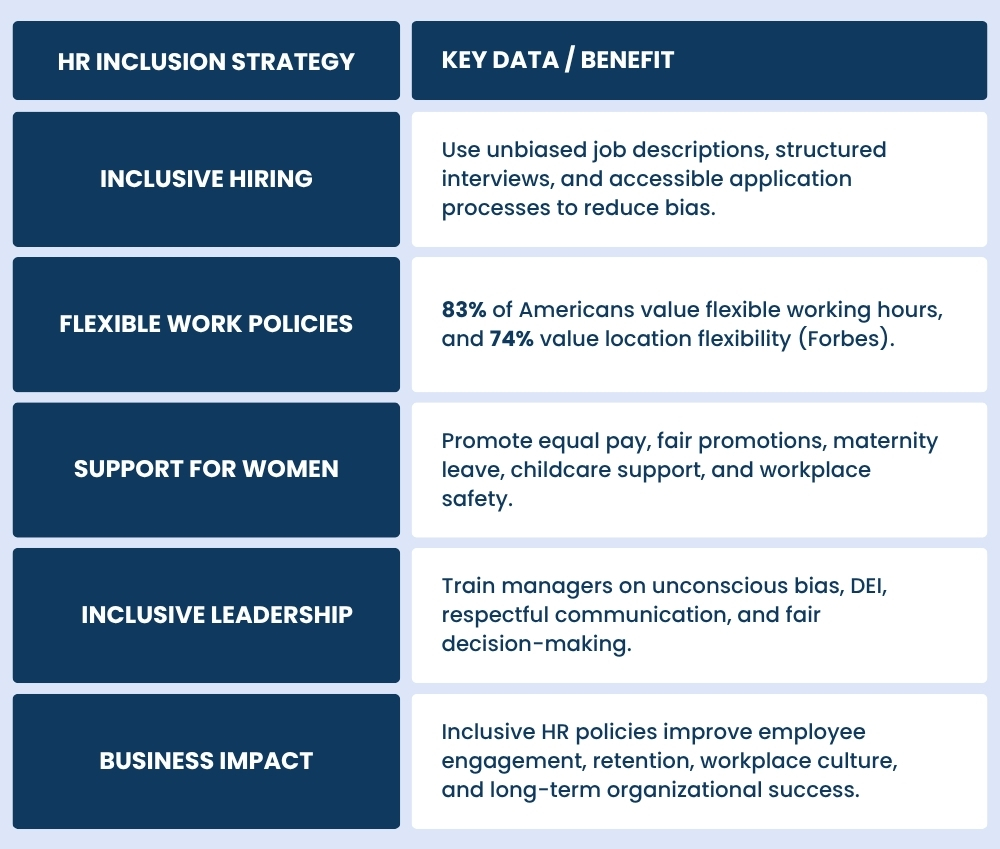
Building inclusive HR policies is an ongoing commitment rather than a one-time initiative. As your workforce evolves, your policies should continue to reflect changing employee needs and workplace expectations.
Staying open to feedback and making thoughtful improvements over time creates a stronger foundation for lasting success. An inclusive approach helps your organization remain adaptable and strengthens your employer reputation. It supports a workplace where people and the business can grow together with confidence.