HR compliance has always been a crucial duty for businesses. However, policy manuals, recurring audits, and manual checklists are no longer the only ways to ensure compliance in today's digital-first workplace. With evolving labor laws, data privacy regulations, hybrid work models, and increasing regulatory scrutiny, HR compliance is undergoing a fundamental shift.
Organizations are now expected to manage compliance continuously, proactively, and with complete transparency. This is where HR compliance automation and AI-driven systems are reshaping how businesses approach legal obligations, risk management, and workforce governance.
The Growing Complexity of HR Compliance in the Digital Workplace
The digital revolution has profoundly altered organizational operations. HR data is no longer kept in filing cabinets, employees are no longer restricted to physical offices, and compliance events are no longer held regularly.
Today’s compliance environment is shaped by:
- Hybrid and remote workforces
- Increasingly detailed employment regulations
- Frequent updates to labor laws
- Greater scrutiny around employee data usage
- Rising expectations for transparency and documentation
Each of these factors increases exposure to HR legal risk if compliance processes are fragmented or outdated.
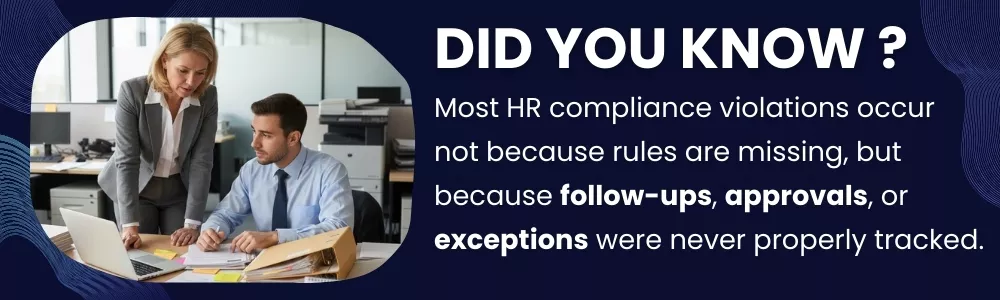
In a digital workplace, compliance failures often happen silently, such as missed approvals, outdated policies, untracked changes, or undocumented exceptions. Until an audit, inspection, or legal challenge arises, these gaps might go unreported. Because of this fact, worker compliance is no longer a yearly checklist but an ongoing operating need.
Why Manual Compliance Management Is No Longer Sustainable
Static documentation, individual accountability, and human memory are all significant components of manual compliance procedures. Although this strategy would have been successful under simpler organizational structures, it is becoming less valuable in contemporary settings.
Typical issues with manual compliance include:
- Updated but inconsistently applied policies
- Verbal or email-based approvals that are not traceable
- Compliance data dispersed over spreadsheets or systems
- Absence of real-time regulatory compliance visibility
- High reliance on important HR staff
These limitations directly undermine compliance with employment law and make organizations vulnerable to penalties, employee grievances, and reputational damage.
As compliance expectations continue to rise, organizations are recognizing that digital HR compliance requires system-level enforcement rather than manual oversight.
The Role of Automation in Modern HR Compliance
HR compliance automation introduces consistency, reliability, and accountability into compliance processes. Instead of relying on reminders or manual follow-ups, compliance rules are embedded directly into HR workflows.
Through automated compliance management, organizations can:
- Enforce approval hierarchies for sensitive actions
- Automatically apply policy rules to attendance, leave, and payroll
- Trigger alerts when compliance thresholds are breached
- Maintain standardized documentation across departments
- Ensure no action bypasses defined compliance controls
Automation ensures that compliance is not optional or dependent on individual discretion. It creates a structured environment where compliance automation tools actively support HR teams in maintaining regulatory alignment while reducing administrative burden.
How AI Is Redefining HR Compliance and Risk Management
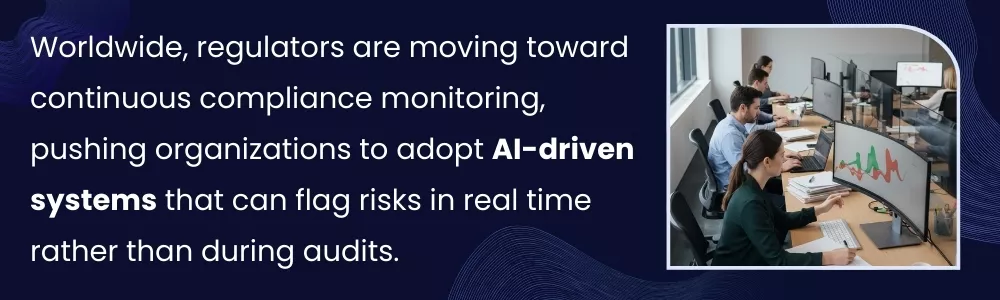
While automation ensures that compliance rules are executed consistently, AI in HR compliance introduces intelligence, context, and foresight. AI-powered systems do not simply follow predefined rules; they continuously analyze workforce data to surface risks, patterns, and anomalies that may otherwise remain hidden until they escalate into legal or regulatory issues.
In modern organizations, HR data flows across multiple functions, including attendance, payroll, leave, performance, access control, and employee lifecycle events. Manually reviewing this volume of data for compliance gaps is impractical and prone to oversight. AI-driven HR systems bridge this gap by processing large datasets in real time and identifying compliance risks as they emerge.
Intelligent Risk Detection Across HR Operations
By spotting minor clues that point to possible problems, such as:
- Unusual payroll changes, including inconsistent deductions, overtime anomalies, or benefit misapplications, can undermine compliance. AI improves compliance
- Unusual attendance or shift patterns that could go against rules or working hours
- Frequent rules violations by particular teams, places, or supervisors
- Applying approvals or disciplinary measures inconsistently
- High-risk patterns associated with specific job categories or contract types
AI offers a comprehensive view of compliance health rather than discrete snapshots by correlating data across multiple HR departments.
Predictive Compliance and Proactive Risk Management
One of the most valuable contributions of AI is its ability to support predictive HR risk management. Instead of reacting to violations after they occur, AI systems can:
- Identify patterns that historically lead to compliance breaches
- Flag departments or roles with elevated compliance exposure
- Highlight recurring exceptions that indicate policy weaknesses
- Forecast areas where regulatory non-compliance is likely to occur
This predictive capability allows organizations to shift from reactive correction to proactive compliance risk management, addressing issues before they result in penalties, disputes, or audits.
Data-Backed Compliance Decision-Making
By facilitating data-driven decision-making, AI also improves compliance governance. Instead of depending on conjecture or anecdotal information, HR personnel can:
- Assess compliance risks with objective insights
- Sort remedial measures according to likelihood and impact
- Use recorded analytics to show compliance attentiveness
- Provide traceable, system-generated evidence to back up audit responses
By ensuring that compliance decisions are justifiable and in line with legal requirements, this strategy improves accountability.
Building Trust Through Transparent and Fair Compliance Practices
AI-driven compliance reduces risk while advancing equity and transparency. Consistent rule application, objective data analysis, and recorded decision justification are beneficial to managers, employees, and leadership.
By incorporating intelligence into compliance processes, organizations may reduce HR legal risk and foster a culture of accountability, consistency, and regulatory confidence. AI does not replace human judgment; rather, it improves it by ensuring that decisions are prompt, educated, and consistent with compliance objectives.
Managing Legal and Regulatory Compliance in a Data-Driven Era
Data governance and modern compliance are inextricably linked. Data privacy in HR is a crucial compliance pillar since employee records now contain personal, financial, and performance-related information. Regulators are putting more and more pressure on companies to show:
- Restricted access to personnel information
- Clearly marked audit paths for data modifications
- Safe retention and storage procedures
- Transparency around data usage
- Accountability for compliance breaches
Centralized solutions with integrated security, role-based access controls, and compliance reporting are necessary to meet HR regulatory requirements. Organizations find it difficult to respond effectively to audits, data requests, or regulatory inquiries without this foundation.
Key Features: What to Look for in HR Compliance Software
Organizations are moving from disjointed systems to unified HR compliance software platforms as compliance requirements become more complex.
An effective compliance system should:
- Integrate compliance rules into daily HR operations
- Support automated approvals and validations
- Centralize documentation and policy records
- Provide real-time compliance visibility
- Adapt to evolving regulatory requirements
- Scale across locations and workforce types
The right platform enables organizations to maintain digital HR compliance while reducing reliance on manual processes and individual intervention.
How HR HUB Supports Modern HR Compliance
Organizations can confidently manage the changing compliance landscape with the aid of HR HUB. It supports compliance throughout an employee's career by combining automation, intelligent controls, and structured workflows.
HR HUB enables organizations to:
- Centralize HR data and compliance documentation
- Automate compliance workflows and approvals
- Maintain audit-ready records and activity logs
- Enforce role-based access aligned with data privacy standards
- Reduce HR legal risk through consistent system controls
By embedding compliance into everyday HR operations, HR HUB helps organizations maintain regulatory alignment without compromising efficiency or transparency.
The Future of HR Compliance
HR compliance now focuses on creating robust systems that can adjust to ongoing regulatory changes rather than merely satisfying minimal requirements. AI and automation are enhancing compliance knowledge rather than replacing it.
Organizations that adopt HR compliance automation and AI-driven compliance strategies are better equipped to:
- Respond quickly to regulatory changes
- Reduce compliance-related disruptions
- Improve audit readiness
- Strengthen governance and accountability
- Build a future-ready HR function
As the digital workplace continues to evolve, compliance will increasingly be driven by intelligent systems, proactive risk management, and integrated HR platforms.