Step into the heartbeat of any Indian restaurant, the smoky kitchen where orders fly, the packed dining floor buzzing with hungry chatter, and the cashier juggling bills, complaints, and compliments all at once. The scene is electric. But behind this energy lies a silent problem that too many restaurateurs face: the struggle to retain their staff.
Call it a churn, a cycle, or simply “how the industry works,” but the issue of restaurant employee retention is no longer just a background nuisance. It’s now affecting how restaurants grow, how customers experience service, and how owners survive in an increasingly competitive space.
But why is it so hard to keep good people in the kitchen, behind the counter, or on the service floor? And how can tech, yes, even in this highly human business, quietly fix the chaos?
Let’s plate it up.
The Real Reasons Indian Restaurant Employees Quit, and They’re Not Always What You Think
Let’s move beyond the textbook reasons. Yes, pay and long hours matter. But dig deeper, and you’ll find something more nuanced: employees are walking out because the system they work in doesn't work for them.
1. Working in the Dark: No Clarity, No Control
Most restaurant staff come in not knowing:
- What their exact responsibilities are
- When their shift starts or ends
- Who approves their leaves or off-days
- Whether they’re doing well or not
This lack of transparency causes frustration. Imagine working 11 hours and not knowing whether you’re even being noticed. Without structure, work becomes survival, not growth.
2. Abrupt Exits, Zero Feedback
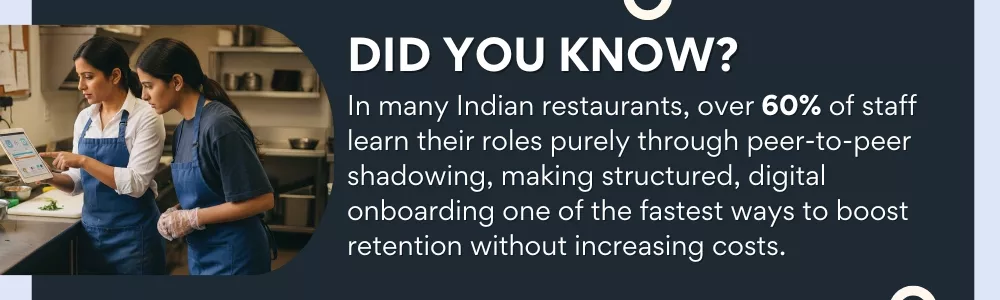
In most setups, employees don’t resign formally. They just stop showing up. Why? Because they never felt connected in the first place. When there’s no onboarding, no check-ins, no conversations about how they’re doing or what could be better, walking away becomes easier than staying.
3. Weekend Burnouts and the "No Sunday Ever" Syndrome
Restaurants peak when the world relaxes. Weekends, festivals, and holidays are busy days. For restaurant workers, this means years of missing birthdays, Diwalis, or even a Sunday morning at home.
And while that’s part of the job, not recognizing it, not compensating for it, or not even offering occasional relief, leaves staff emotionally exhausted. Burnout is real, and it leads to silent exits.
4. No Career Roadmap, Just Rotational Roles
A waiter joins. Three months later, he’s still a waiter. A kitchen helper joins. One year later, still there, still doing prep work. In the absence of training or a clear growth path, employees feel stuck in a loop. No one wants to be on a treadmill going nowhere.
The Hidden Cost of High Turnover in Restaurants
Most restaurant owners think of turnover costs in terms of salaries. But the real costs run deeper.
- Training Time: Every new employee needs to be trained on the flow, menu, POS system, customer handling, and hygiene protocols. And that costs time, often from your senior staff.
- Operational Gaps: You’re short-staffed one day. Orders get delayed, and service drops. Negative reviews start to pile up. Customers don’t care about your staffing issues; they remember how their evening was ruined.
- Team Morale: Constant exits create a toxic loop. Those who stay become overworked, resentful, and disengaged.
- Brand Dilution: Your food may be excellent, but service is what most customers remember. A revolving door of staff ruins that continuity.
In short, high attrition silently drains your efficiency, customer loyalty, and profit margins.
Enter HR Tech: Not Just for Corporations Anymore
Let’s shift gears.
For too long, HR software has been seen as something meant for office spaces, think payroll teams, performance reviews, and leave tracking for IT employees. But the new wave of restaurant-specific HR platforms is changing that perception.
And the results? Remarkable.
Let’s look at how HR tech directly tackles restaurant employee retention problems in the Indian context.
1. Structured Hiring & Seamless Onboarding, Even in High-Churn Roles
A dishwasher joins. Instead of being thrown into the deep end, he’s greeted with a welcome message on his phone. He fills out his information digitally. He watches a 3-minute explainer on hygiene protocol. He knows where the lockers are, who to report to, and how to ask for help.
This isn’t a luxury. This is basic onboarding made easy through mobile-friendly HR tools.
Even for small restaurants, this creates an emotional connection from day one.
2. Shift Planning with Visibility for Everyone
One of the most common triggers for exits is poor shift management.
When schedules are shared at the last minute, changed at random, or favor a few select employees, it causes resentment. But with HR tech:
- Employees can see their upcoming shifts in advance.
- They can apply for swaps.
- Managers get alerts when someone is overbooked.
Everyone’s time is respected. And that’s how loyalty builds.
3. Exit Pattern Analysis and Predictive Retention
HR tech doesn’t just help you when someone leaves. It enables you to see the signs before they do:
- Has someone stopped applying for leave altogether?
- Did their performance drop after being denied a Sunday off?
- Are new hires quitting before day 30?
With real-time dashboards and behavioral data, HR analytics for restaurants help managers act early, offer support, check-in, and realign responsibilities before another resignation happens.
4. Learning Modules to Unlock Internal Growth
HR platforms today allow you to build or integrate micro-learning modules.
Let’s say a waiter wants to become a floor supervisor. The system unlocks a miniature course on leadership basics, complaint handling, or basic English.
As staff complete modules, they become eligible for new roles. Internal growth becomes visible, achievable, and inspiring.
This is how jobs turn into careers. And careers build retention.
5. Performance Tracking That Feels Human, Not Robotic
Using HR analytics for restaurants, even basic staff data can be powerful:
- Who’s been punctual for the last 60 days?
- Who gets the most positive customer mentions?
- Who helped train two new staff members?
These metrics help you recognize, promote, and reward real contribution, not just visible effort. It shifts the culture from criticism to appreciation. And when staff feel noticed, they stay.
But performance isn’t just numbers. It’s emotional temperature, too.
Modern HR systems also include emotional wellness tools, such as anonymous pulse checks and simple feedback loops, that let staff express how they actually feel.
Every month, employees can share if they’re overworked, unheard, satisfied, or stressed, without fear of judgment.
These aren’t fluff features. They’re early-warning signals. When you know what your people are feeling beneath the surface, you can intervene early, adjust workload, realign roles, or offer support before it becomes burnout or another silent resignation.
In other words, performance tracking becomes complete, measuring effort, output, and emotional well-being.
Retention Isn’t a Perk. It’s a Practice.
In Indian restaurants, employee exits are so common that they’ve become normalized. But normal doesn’t mean healthy.
When you normalize attrition, you lose:
- Consistency in service
- Efficiency in operations
- Trust from customers
- And your edge in a crowded market
What’s needed is a systemic shift, not a motivational speech. And HR HUB is designed to support exactly that.
The Real Secret Behind Successful Restaurants? People Who Stay.
You can have the best chef in town, the perfect biryani recipe, or a beautifully lit rooftop space, but if your staff changes every few weeks, your customer experience will crumble.
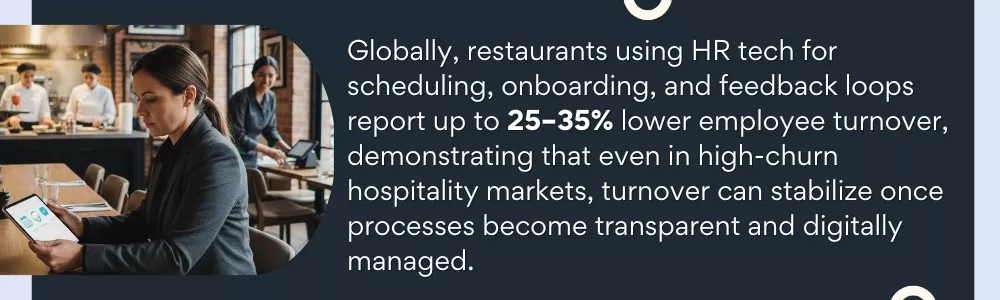
HR HUB gives you the tools to manage, retain, and grow your people with the same care you give to your menu. It also offers a localized platform with compliance features relevant to Indian labor laws (where applicable) and the unique needs of your staff. Whether you’re managing 5 employees or 500, the platform adapts to your scale, with features like:
- Digital onboarding and document collection
- Shift planning with mobile access.
- Real-time performance tracking
- HR analytics for restaurants to identify risk areas, including frequent absences, late arrivals, repeated unplanned leaves, declining performance, new hires leaving early, salary misunderstandings, employees feeling unheard, lack of training or skill development, and high resignations in specific roles or shifts.
- Internal training module support
- Exit feedback dashboards
- Seamless integration with payroll
Smart restaurants in India are already using HR HUB to reduce attrition, boost morale, and build teams that stay and thrive.