Hotels don't lose guests because they run out of rooms.
Sometimes, they lose them because they run out of the right people at the right time.
A busy weekend in the Caribbean.
A cruise ship arrives early. A tropical festival fills every hotel room. Restaurant reservations double overnight, and guests expect the same warm hospitality the islands are known for. Behind the scenes, however, the operations team is dealing with a completely different reality.
- One housekeeper called in sick.
- Two front desk employees want to swap shifts.
- The restaurant manager needs extra servers for dinner service.
- Payroll must account for overtime worked during the previous holiday weekend.
Meanwhile, HR is updating schedules on paper, answering phone calls, approving leave requests, checking attendance records, and trying to ensure every department is fully staffed before the next group of guests checks in.
For many Caribbean hospitality businesses, this isn't an unusual day it's an everyday business.
Whether it's a boutique hotel in the Cayman Islands, an all-inclusive resort in Jamaica, a beachfront villa in Barbados, or a dive resort in the British Virgin Islands, hospitality relies on one thing above everything else:
Having the right employees available at the right time.
That's why hospitality workforce management has become far more than an HR function. It's now an operational necessity that helps businesses improve guest experiences while reducing administrative workload.
Instead of relying on whiteboards, spreadsheets, printed rosters, and endless WhatsApp messages, hospitality businesses are moving toward digital workforce management that keeps everyone connected, informed, and ready for every shift.
What Is Hospitality Workforce Management?
At its core, hospitality workforce management is the process of planning, scheduling, tracking, and managing employees who keep hospitality businesses running every day.
Unlike many industries that operate standard office hours, hospitality businesses work around the clock.
- Hotels operate 24/7.
- Restaurants serve breakfast, lunch, and dinner.
- Resorts host guests throughout the day and night.
- Housekeeping teams follow changing occupancy levels.
- Maintenance staff remain on standby for unexpected issues.
- Tour operators adjust schedules based on weather and guest bookings.
Managing all this manually quickly becomes overwhelming.
A modern workforce management software solution brings these moving parts together in one centralized platform to manage compliances. Managers can build employee schedules, monitor attendance, approve leave requests, manage overtime, communicate shift updates, and prepare payroll without juggling multiple spreadsheets or paper records.
Instead of reacting to staffing issues after they happen, businesses can plan with greater confidence.
Why Hospitality Scheduling Is More Challenging Than Other Industries
Retail stores may close in the evening.
Corporate offices typically work Monday through Friday.
Hospitality doesn't have that luxury.
Hotels, restaurants, resorts, and tourism businesses continue operating during weekends, holidays, cruise arrivals, festivals, and peak travel seasons the exact times when staffing becomes most difficult.
Managers often face challenges like:
- Employees working rotating shifts
- Seasonal hiring during tourist peaks
- Last-minute employee absences
- Overtime management
- Multi-property workforce coordination
- Staff working split shifts
- Employees requesting shift swaps
- Different departments requiring different staffing levels
Trying to coordinate these moving parts using spreadsheets often creates confusion.
- An outdated roster gets printed.
- An employee reports the wrong shift.
- Overtime isn't tracked correctly.
- A replacement employee is notified.
- Payroll requires manual adjustments at the end of the month.
These small issues eventually affect guest satisfaction, employee morale, and operational costs.
This is exactly where hospitality scheduling software becomes valuable.
Paper Schedules Work...Until They Don't
Many Caribbean hospitality businesses still rely on printed schedules pinned to notice boards.
While this method may seem familiar, it becomes increasingly difficult as the business grows. Imagine updating next week's schedule.
- One employee requests leave.
- Other changes departments.
- A supervisor approves a shift swap.
- Someone calls in sickness.
- Now every printed copy is already outdated.
- Managers begin making phone calls.
Employees send text messages asking which shift they're working.
Some arrive early.
Others arrive late.
Someone misses their shift completely because they never received the updated roster.
The problem isn't poor management. It's relying on tools that weren't designed for today's hospitality operations.
Replacing paper schedules with employee scheduling software allows everyone to access the latest schedule instantly, reducing misunderstandings and improving communication across departments.
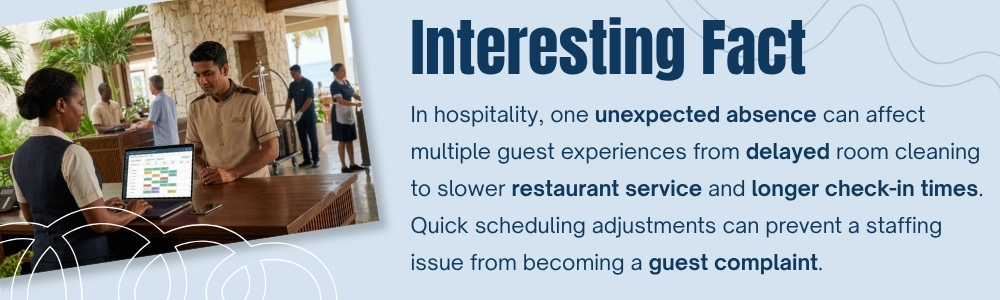
Employee Roster Management: Keep Every Department Fully Staffed
In hospitality, knowing who is scheduled is only one part of the equation. Managers also need to know who is available, who is on leave, who is working overtime, and who can step in when business demand suddenly changes.
An Employee Roster becomes invaluable as it gives managers better visibility into team availability.
Instead of maintaining multiple spreadsheets for different departments, managers can view employee availability, assigned shifts, attendance status, and weekly schedules from one place.
For Caribbean businesses operating multiple restaurants, villas, hotels, or resort properties, having a centralized roster helps managers distribute employees more effectively without overloading the same team members.
The result is balanced staffing, improved productivity, and better guest experience.
1.Smarter Shift Planning
Anyone working in hospitality knows that shift changes are inevitable. An employee may need to swap shifts for a family event. Someone may request an early shift after returning from vacation.
Another employee may volunteer to work extra hours during the busy season. When these requests happen through phone calls, WhatsApp messages, or handwritten notes, it's easy for something to be overlooked.
A missed update can leave an entire department understaffed.
Modern hospitality workforce management systems allow employees to submit Shift Change Requests digitally. Managers receive the request instantly, review employee availability, approve or reject it, and automatically update the schedule.
Everyone sees the latest roster, reducing miscommunication and ensuring operations continue without disruption.
2.Prevent Last-Minute Changes
One of the biggest frustrations for hospitality managers is making schedule changes after the weekly roster has already been finalized.
Employees may continue requesting changes, leading to confusion over which version of the schedule is current.
Once managers finalize the roster, schedules can be locked to prevent unauthorized changes. If an emergency occurs, authorized managers can unlock the schedule, make the necessary adjustments, and notify affected employees immediately.
This creates accountability while giving businesses the flexibility they need during unexpected situations. At this HR needs an attendance management system where they can make changes at any time, and everyone will be automatically notified.
3.Leave Management Without Endless Follow-Ups
Leave requests become more complicated during peak tourism seasons. Managers must balance employee wellbeing with business requirements.
Approving too many leave requests at once can leave departments short-staffed. Rejecting requests without visibility creates employee dissatisfaction.
Integrated leave management helps managers review employee availability, department staffing, existing leave approvals, and business demand before making informed decisions.
Employees can submit leave requests digitally, monitor approval status, and receive notifications without repeatedly contacting HR. The process becomes faster, more transparent, and significantly easier to manage.
4.Attendance and Timesheets Support Accurate Payroll
Attendance doesn't end when employees clock in. Hospitality businesses often deal with:
- Split shifts
- Overnight shifts
- Double shifts
- Holiday work
- Overtime
- Weekend schedules
- Flexible working hour
Trying to calculate these manually increases the likelihood of payroll errors.
A modern workforce management software platform connects attendance with timesheets, allowing managers to review actual working hours before payroll processing begins.
Instead of reconciling attendance manually, approved working hours automatically support payroll calculations, helping reduce disputes and ensuring employees are paid correctly for the hours they've worked.
5.Payroll Becomes Easier
Payroll accuracy depends on workforce accuracy. If attendance records are incomplete, overtime isn't approved, or shift information is incorrect, payroll mistakes become inevitable.
By integrating attendance, schedules, leave, overtime, and payroll into one system, hospitality businesses reduce manual payroll adjustments and improve overall accuracy.
For hotels and resorts employing seasonal workers, part-time staff, and multiple shift patterns, this level of automation saves valuable administrative time for every payroll cycle.
6.Smart Notifications
Hospitality moves quickly and schedules change, shift swaps are approved, leave requests are processed, and managers update rosters.
Employees need immediate information. Instead of relying on notice boards or group chats, automated notifications ensure employees receive updates as soon as changes occur. Notifications can be sent for:
- New shift assignments
- Shift changes
- Approved leave
- Rejected requests
- Schedule updates
- Overtime approvals
- Payroll availability
- Important announcements
This keeps communication clear while reducing the number of follow-up calls and messages managers need to make.
Technology Should Help Managers Spend More Time With Guests
The hospitality industry has always been about people. Technology shouldn't replace that. It should remove the administrative work that keeps managers away from their teams.
Instead of updating spreadsheets, printing new rosters, or answering dozens of scheduling questions every day, managers should be walking the property, coaching employees, and ensuring every guest receives exceptional service.
That's where digital workforce management creates its biggest impact. It quietly handles the administration so people can focus on hospitality.
Caribbean Hospitality Grows, Management Needs to Grow Too
Across the Caribbean, hospitality businesses are becoming more dynamic. Hotels are managing higher occupancy during peak seasons, restaurants are responding to fluctuating customer demand, and resorts are coordinating teams across multiple departments every day.
As operations become more complex, relying on paper schedules and disconnected spreadsheets becomes increasingly difficult.
A connected workforce management platform makes it easier to manage attendance, employee rosters, rotating shifts, leave, overtime, payroll, and day-to-day communication from one place helping managers respond faster while giving employees greater clarity about their work schedules.
For businesses looking to modernize these processes, platforms like HR HUB bring these capabilities together in a single solution.
With features such as Attendance, Employee Roster, Shift Management, Shift Change Requests, Leave Management, Payroll, Timesheets, Notifications, and more, hospitality teams can spend less time on administration. And they spend more time delivering memorable guest experiences.
Frequently Asked Questions
1.Why do hotels need employee scheduling software?
Employee scheduling software helps hotels reduce scheduling conflicts, manage rotating shifts, respond to last-minute absences, and improve communication between managers and employees.
2. How does hospitality scheduling software improve guest experience?
By ensuring adequate staffing during busy periods, hospitality scheduling software helps reduce service delays, improve operational efficiency, and maintain consistent guest service standards.
3. Can workforce management software handle seasonal hospitality staffing?
Yes. Modern workforce management software makes it easier to schedule seasonal employees, temporary workers, part-time staff, and rotating teams while maintaining visibility into attendance and payroll.