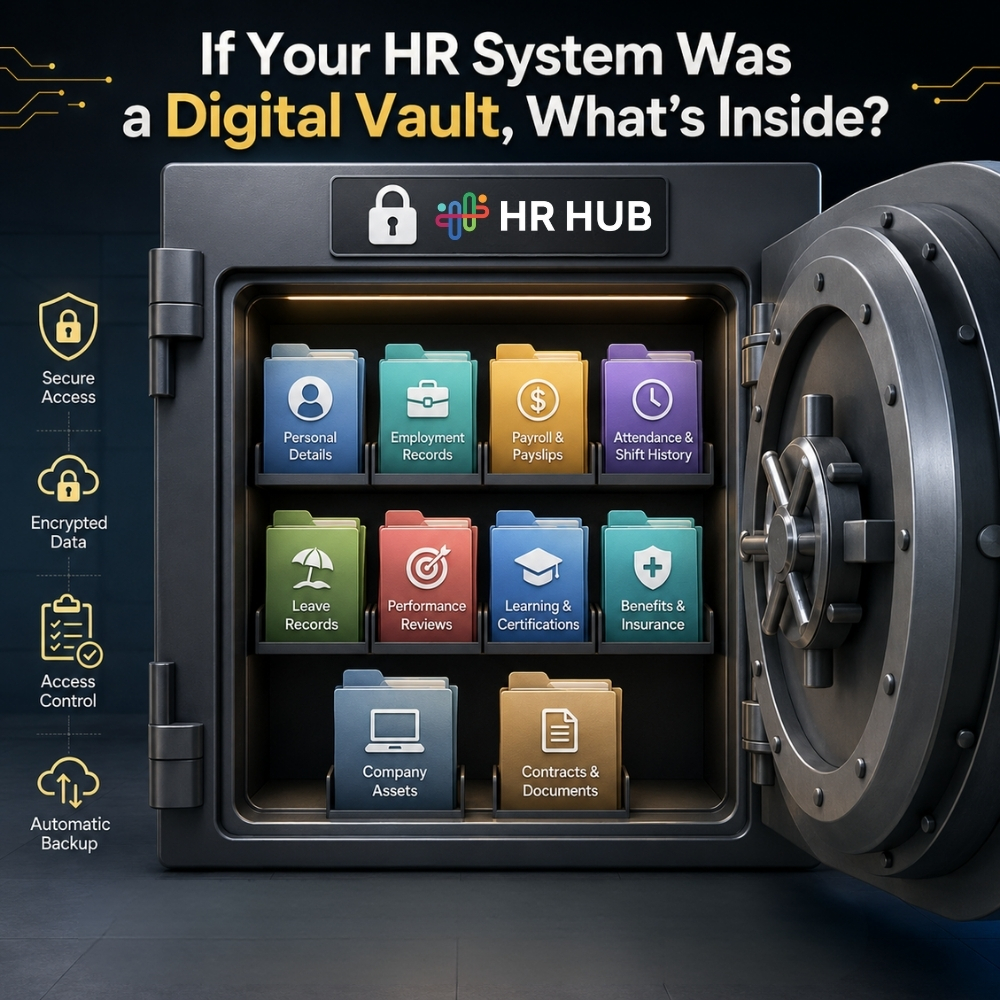
Think about everything your HR department knows about an employee. From the day they join until the day they leave, the organization collects a wide range of information, including personal details, payroll records, tax forms, attendance history, performance reviews, training certificates, and employment contracts.
An employee needs a copy of their salary slips for a home loan application. Another wants to check their leave balance before planning a vacation. Someone else needs to update their emergency contact details after moving to a new city.
The expectation is simple. They should be able to access their information quickly, securely, and without sending multiple emails to HR.
Now ask yourself one question.
Where is all this information stored?
For many organizations, the answer isn't always clear. Some records sit in spreadsheets, others in email attachments, while older documents remain locked away in filing cabinets. This scattered approach creates confusion, increases security risks, and makes compliance much harder than it needs to be.
This is why HR data residency has become an important factor when choosing an HR management system. Businesses want confidence that employee information is stored in the right location, protected against unauthorized access, and available whenever it is needed.
Modern HR software not only centralizes employee records but also gives organizations greater control over employee data privacy, security policies, and regulatory requirements. At the same time, employees gain secure access to their own information without waiting for HR to retrieve documents.
What Is HR Data Residency?
HR data residency refers to where employee information is physically stored in a region or country.
When a company adopts cloud HR software, the data is usually hosted in secure data centers. Depending on the software provider, these data centers may be located within the company's own country or in another region.
Many organizations now evaluate data residency before purchasing an HRMS because different countries have different regulations regarding employee information.
Knowing where employee records are stored helps businesses answer important questions such as:
- Is employee information stored in a secure location?
- Who has permission to access it?
- Does the storage location support local compliance requirements?
- Can employees safely access their own information?
- How is sensitive information protected from unauthorized users?
Choosing the right HR data residency strategy gives organizations greater confidence while helping employees trust how their information is managed.
Why Are Businesses Paying More Attention to Data Residency?
Employee information is one of the most valuable assets within any organization.
Unlike operational documents, HR records contain highly confidential details that should only be accessible to authorized users.
As companies grow across different offices and countries, managing employee information becomes more challenging.
Instead of maintaining multiple spreadsheets, paper files, and disconnected systems, organizations are moving toward centralized HR platforms where all employee records remain in one secure location. This approach supports better HR data security while making information easier to manage.
A centralized HR system also reduces duplicate records, minimizes manual updates, and helps HR teams respond faster whenever employees request information.

What Data Should Be Stored in HR Software?
An HR management system should become the organization's single source of truth for employee information.
Here are the major categories that should be maintained centrally.
1. Personal Employee Information
Every employee profile should securely store:
- Full name
- Employee ID
- Date of birth
- Address
- Phone number
- Email address
- Emergency contacts
- National identification details
Having this information in one place makes updates simple and improves record accuracy.
2. Employment Information
Organizations should maintain:
- Date of joining
- Department
- Job title
- Reporting manager
- Employment status
- Offer letters
- Employment contracts
- Confirmation letters
- Promotion history
- Transfer history
These records create a complete employment journey for every employee.
3. Payroll Records
Payroll information is among the most confidential HR data. A centralized system should store:
- Salary structure
- Monthly payroll
- Bonuses
- Incentives
- Tax deductions
- Pension contributions
- Bank details
- Payslips
- Payroll history
Employees can securely download payslips whenever required instead of contacting HR.
4. Attendance and Leave Records
Daily workforce management becomes easier when software stores:
- Attendance history
- Working hours
- Shift schedules
- Overtime
- Leave balances
- Leave approvals
- Holiday calendars
Employees can check their leave status or attendance throughout the month instantly through self-service.
5. Performance Management Data
Performance records should include:
- Annual reviews
- Performance goals
- Manager feedback
- Development plans
- Ratings
- Recognition history
Since these records contain sensitive information, access should be limited using role-based permissions.
6. Learning and Development Records
Training information should include:
- Courses completed
- Certifications
- Skills
- Compliance training
- Learning progress
Employees can track their own growth without requesting updates from HR.
7. Benefits and Compensation
The HR system should also maintain:
- Insurance enrollment
- Retirement plans
- Employee benefits
- Reimbursements
- Allowances
- Benefit eligibility
Everything stays organized and easily accessible.
8. Compliance Documents
Important legal records include:
- Tax declarations
- Signed company policies
- Visa documents
- Work permits
- Identity verification
- Compliance acknowledgements
These documents should remain securely stored for future audits.
Why Every Organization Needs a Centralized HR Database?
One of the biggest mistakes businesses make is storing employee information across multiple systems.
For example:
- Payroll files are stored separately.
- Employment contracts are saved in shared folders.
- Leave records are managed in spreadsheets.
- Performance reviews are emailed between managers.
- Training certificates are stored in different applications.
Finding information becomes time-consuming, and keeping everything updated becomes even harder.
A centralized HR system solves this problem by storing all employee records in one secure location.
Instead of searching through different platforms, HR teams can quickly access accurate information from a single source.
Employees also benefit because they no longer need to request basic documents from HR every time they need them.
Why Centralized Employee Data Makes Every Day Work Easier
Think about how many documents an employee generates during their journey with an organization.
The process starts with recruitment, continues through onboarding, payroll, attendance, performance reviews, training, promotions, and eventually offboarding. If these records are stored across different folders, spreadsheets, emails, and filing cabinets, finding a single document becomes time-consuming.
A centralized HR system changes that completely and make employee data management. Instead of searching through multiple systems, everything is available from one secure location.
For HR professionals, this saves countless administrative hours.
For employees, it creates a smoother experience because important records are available whenever needed.
This is one of the biggest advantages of combining HR data residency with modern cloud HR software security.
How HR Data Security Protects Sensitive Information
Employee records contain highly confidential information. Without proper safeguards, businesses expose themselves to unnecessary risks. Strong HR data security includes several protective measures.
- Encryption: Sensitive information remains encrypted while being stored and transmitted.
- Authentication: Secure login methods to verify user identity before granting access.
- Role-Based Permissions: Users only see the information necessary for their role.
- Audit Logs: Every important activity is recorded, making it easier to identify changes and investigate unusual activity.
- Secure Backups: Automatic backups help recover information if unexpected issues occur.
These security controls protect employee information throughout its lifecycle.
Why Data Localization Is Becoming More Important
As businesses expand internationally, regulations around employee information continue to evolve.
Many governments now require organizations to follow data localization rules that specify where certain employee records must be stored. It helps:
- Protect personal information
- Meet local compliance requirements
- Improve regulatory oversight
- Reduce legal complications involving international data transfers
Organizations should understand these requirements before selecting an HR solution.
Your Employee Data Deserves Better Than Scattered Files
Every employee expects their information to be accurate, secure, and easy to access. Every HR team wants fewer manual tasks, stronger compliance, and greater confidence in how employee records are managed.
With HR HUB, your organization can centralize employee information, strengthen HR data residency, improve employee data privacy, and protect sensitive records with enterprise-grade cloud HR software security.
Whether you're growing your workforce or modernizing your HR operations, HR HUB provides the secure foundation you need to manage employee data with confidence.
Frequently Asked Questions
1. Can I see my own HR records without asking HR every time?
Yes. With an employee self-service portal, you can securely access your personal information, payslips, leave balances, attendance records, and documents whenever you need them.
2. If I update my phone number, will every HR record update automatically?
In most modern HR systems, your profile information is stored centrally, so approved updates appear wherever that information is used, helping reduce duplicate records.
3. Who can actually see my salary and personal documents?
Only users with the appropriate permissions, such as authorized HR or payroll administrators. Role-based access helps protect confidential employee information.
4. What happens if my company grows or opens offices in another country?
A cloud-based HR system with flexible HR data residency and data localization options can help organizations manage employee data securely while meeting local compliance requirements.