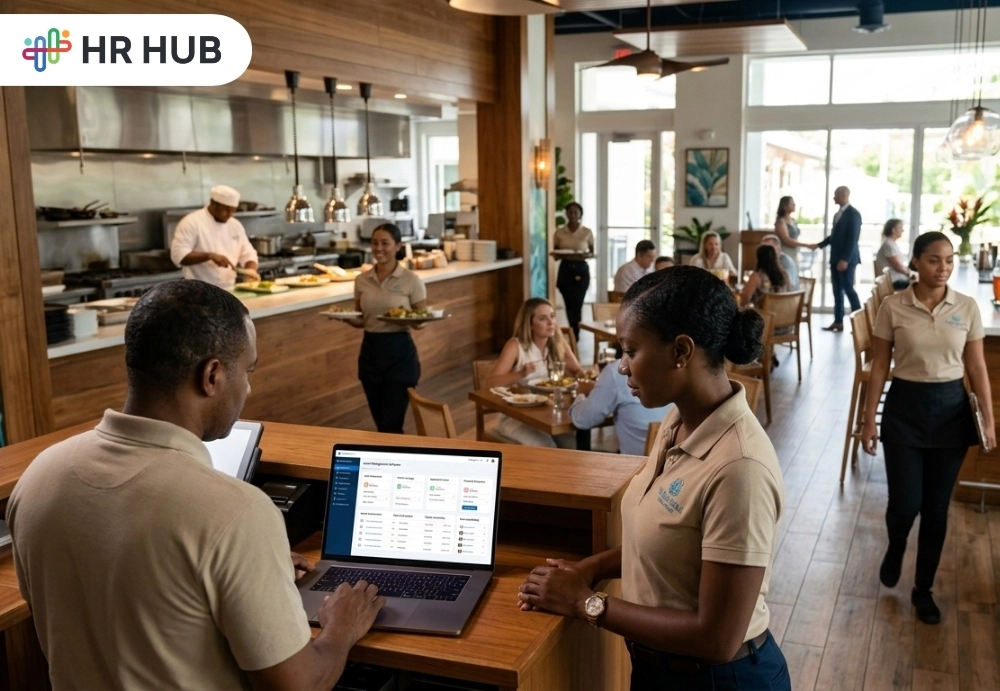
Friday evening is fully booked in restaurant. The kitchen is preparing dinner. Tables are filling up. Delivery orders are coming in. Then the restaurant manager realizes something.
- One server is on approved leave.
- A cook requested the evening off.
- Another employee swapped shifts earlier in the week.
- And the supervisor who normally handles leave approvals is away.
The restaurant has plenty of employees on paper. But does it have the right people to work tonight?
That is the problem with managing restaurant leave through registers, spreadsheets, WhatsApp messages, and memory. Recording who is taking leave is easy. Understanding how that absence affects the shift is much harder.
Restaurants rarely have one simple working schedule. They may have full-time employees, part-time staff, split shifts, morning and evening teams, flexible timings, and office employees working partly from home.
That is why Leave Management Software should do more than record days off. It should help managers understand employee availability, prevent overlapping absences, keep approvals moving, and maintain clearer leave records across different schedules.
Because in a restaurant, one person taking leave does not only leave an empty chair. It can leave an entire shift short.
Restaurant Leave Is Different from Office Leave
In a regular office, an employee taking Tuesday off may mean a meeting gets moved. In a restaurant, the same absence can affect service immediately. A restaurant depends on different roles working together:
- Chefs prepare food.
- Kitchen assistants support preparation.
- Servers manage tables.
- Bartenders handle drinks.
- Hosts manage arrivals and reservations.
- Supervisors coordinate the floor.
- Cleaning teams keep operations moving.
- Managers oversee the entire service.
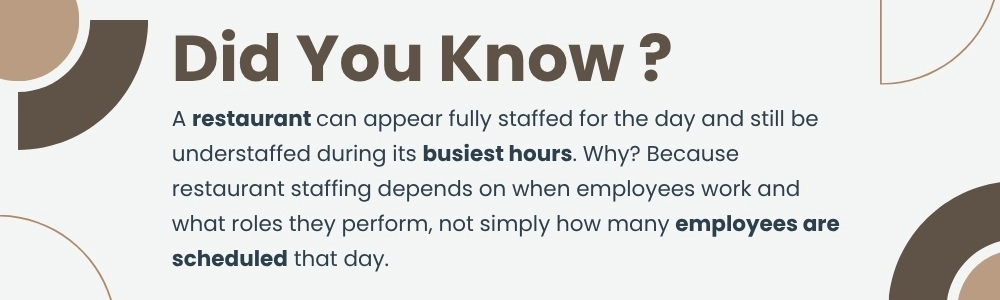
An employee from one role cannot always replace someone from another. Having ten employees scheduled does not help much if the only bartender working the evening shift takes leave.
This is why restaurant managers need to think about coverage, not simply headcounts.
An employee leave management system gives managers a structured way to review leave requests and upcoming absences instead of discovering staffing gaps when the shift begins.
Leave Register Knows Who Is Off. Does It Know Who Can Cover the Shift?
Imagine a restaurant that has three cooks assigned to the evening shift.
- One requested Friday off two weeks ago and the manager approved it.
- A second employee recently submitted leave through email.
- The third tells the supervisor on Thursday that their leave was already approved verbally.
All three requests may be valid. The problem is that nobody looked at them together. A paper register can record each absence, but it cannot automatically warn the manager that several people from the same working group may be unavailable.
With Leave Management Software, leave information stays in one place, making it easier for managers to review upcoming absences before approving another request.
For restaurants with multiple shifts, that visibility can make the difference between a normal dinner service and a frantic search for someone willing to come in. Restaurants managing changing shifts should also understand how leave approvals, shift changes, and payroll work better when HR systems stay connected.
Morning Shift, Evening Shift, Split Shift: Leave Has Context
Restaurant schedules rarely fit neatly into 9 AM to 5 PM. An employee may work breakfast. Another starts before lunch. Someone else joins for dinner.
Some employees work split shifts, covering two busy periods with a break between them.
- Full-time employees may have rotating weekly schedules.
- Part-time employees may only work on particular evenings.
When an employee requests to leave, the date alone does not always tell the whole story. Managers need to consider which shift, team, or operational period will be affected.
An employee leave tracker provides a reliable record of time off, while schedules and attendance provide the working context around it.
Leave Management Software helps restaurants move away from leave information scattered between a register at the manager's desk, messages on different phones, and spreadsheets that may not have been updated.
One source of leave information makes planning much easier.
Flexible Timings Need a Clear Leave Process Too
Not every restaurant employee follows fixed shifts. Managers may adjust their schedules based on business needs. Administrative staff may have flexible timings.
Marketing, finance, HR, or senior management employees may even follow hybrid working arrangements for leave managment. A restaurant group with multiple locations can have several working patterns operating under the same company. The leave process should still be consistent as employees should know:
- How much leave they have.
- How to submit a request.
- Who needs to approve it.
- Whether it has been approved.
- What happens if their manager is unavailable.
A centralized employee leave management system gives employees and managers a common process even when their working schedules differ.
Flexible working should not mean flexible record keeping.
Employees Should Not Need to Visit the Manager's Office to Request Leave
Restaurant employees are busy during working hours.
- A chef cannot stop preparing orders because HR needs a paper leave form.
- A server should not have to wait until the dinner rush ends to find the manager and ask about a leave balance.
- And an employee working the late shift should not depend on HR being available during office hours.
Employee self-service changes this experience. With Leave Management Software, employees can access their leave information, submit requests, and check request status through a digital process.
An employee leave tracker keeps the request connected to the employee's record.
- For employees, that means less chasing.
- For managers, fewer handwritten notes.
- For HR, fewer requests that need to be manually entered later.
Managers Need to See the Team Before Approving the Next Request
Consider two leave requests.
- Request A: A server wants Tuesday afternoon off when six other servers are available.
- Request B: A server wants Saturday evening off when two servers already have approved leave.
The employee may have enough leave balance in both situations. Operationally, the requests are very different. This is why Leave Management Software needs to support manager visibility. Before deciding, managers should be able to understand existing absences and consider whether adequate coverage remains.
Leave calendar software helps provide a wider view. Instead of approving requests one at a time without context, managers can plan to leave around actual restaurant operations.
This can also make decisions fairer. Employees are less likely to feel that approvals depend on which manager happens to remember the schedule.
What Happens When the Approver Is on Leave?
There is a slightly ironic leave problem that many organizations eventually experience.
- The employee submits leave.
- The request reaches the manager.
- The manager is on leave.
- Nothing happens.
- The employee follows up.
- HR checks.
Someone contacts the manager during their holiday.
Now the company's leave process has managed to disturb the person who successfully got their leave approved.
Workflow delegation provides a better option. With absence of management software, businesses can define what should happen when the normal approver is unavailable.
An authorized manager or supervisor can handle the required action based on company rules.
This is particularly useful for restaurants because management coverage can change across shifts, locations, and days.
The approval process should continue even when one person is away.
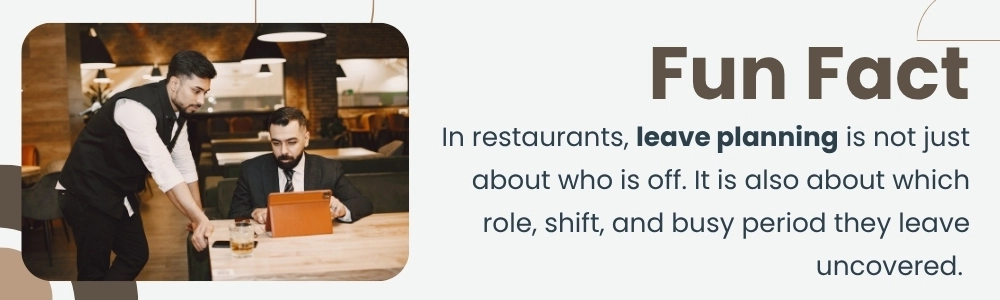
Leave Calendars Can Help Protect the Employees Who Are Working Too
Poor leave planning does not only affect customers.
It affects the employees who show up.
If several employees from the same shift are unavailable, the remaining team may need to handle additional tables, longer queues, more preparation, and extra responsibilities.
Occasionally helping during a busy shift is part of restaurant work.
Repeated understaffing is different.
Over time, poor coverage can create frustration among employees who regularly carry the additional workload.
Using leave calendar software, managers can plan upcoming absences earlier and decide whether schedules need adjustment.
Good leave management is not about preventing people from taking time off. It is about making sure their colleagues do not pay the price every time they do.
Leave, Attendance, and Gratuity Work Together
For restaurant employees, earnings may include more than a regular salary. Tips or gratuity can also form part of pay, depending on the restaurant's distribution policy. That is why leave and attendance records matter.
If gratuity is distributed based on eligible shifts or hours worked, the restaurant needs a clear record of who worked, who was on approved leave, and how much gratuity each employee is entitled to receive.
A connected process can look like this:
Shift Worked Attendance Recorded Leave Checked Gratuity Calculated Added to Payroll
Once the gratuity amount is calculated according to the restaurant's rules, it can be included as an earning component in payroll.
This gives HR better clarity and helps employees understand how their attendance, leave, and gratuity are reflected in their final pay.
Notifications Can Replace the Daily Leave Follow-Up
Restaurant managers already have enough messages.
- Supplier updates.
- Staff questions.
- Reservation issues.
- Shift changes.
- Customer concerns.
They should not also need five reminders about one leave request.
- "Did you see my request?"
- "Any update?"
- "Can I book my trip?"
- "Has HR approved it?"
With Leave Management Software, notifications can alert managers when action is required and inform employees when request status changes.
The employee leave management system becomes the place where the request lives instead of relying on a chain of messages. Employees can check their status themselves. Managers know which requests need attention. HR has a clearer record of what happened.
Leave Management Software Is Also a Restaurant Planning Tool
Restaurants cannot avoid employee leave. Nor should they try. Employees need holidays, personal time, family time, and opportunities to rest.
The question is not: "How do we reduce leave?"
A better question is: "How do we manage leave without losing sight of the restaurant?"
An employee leave tracker helps maintain individual leave records. An employee leave management system gives employees and managers a structured request and approval process. Leave calendar software provides visibility into upcoming absences. Absence management software helps HR manage time consistently.
And Leave Management Software brings these pieces together so leave can be planned rather than discovered.
That matters whether your restaurant has one location or several, fixed schedules or rotating shifts, full-time teams or flexible working arrangements.
Conclusion
Restaurant service moves quickly. Your leave process should keep up.
HR HUB helps restaurants manage employee leave through self-service requests, leave balances, approval workflows, delegation, notifications, and clearer visibility into who is on leave.
Whether your employees work full-time schedules, flexible hours, rotating shifts, multiple shifts, or hybrid roles behind the scenes, HR HUB helps keep leave information in one place.