Suddenly one day, your most dependable employees who are always punctual, rarely take leave, consistently meet deadlines, and are the first to volunteer when extra work needs to be done. Then, almost without warning, things begin to change. They start arriving late, miss deadlines, take more sick days, avoid conversations with colleagues, and seem less engaged during meetings.
Most organizations notice these changes only after productivity drops, or the employee submits a resignation.
What if HR could identify these warning signs earlier?
Modern organizations generate workforce data every day. Attendance records, leave requests, overtime hours, timesheets, x reviews, and employee life cycle events all tell a story. Individually, these records may not mean much. Together, they can reveal patterns that point toward employee burnout long before it reaches a breaking point.
This is where employee burnout software becomes valuable. Rather than monitoring employees' minute by minute, it helps HR teams recognize trends, identify potential risks, and start supportive conversations before stress turns into resignation.
The goal isn't to replace managers with technology. It's to give HR better visibility so they can build healthier workplaces where employees feel supported instead of being overwhelmed.
What Is an Employee Burnout?
Employee burnout is a state of physical, emotional, and mental exhaustion caused by prolonged workplace stress.
It does not simply mean feeling tired after a busy week. Instead, burnout develops when employees experience ongoing pressure without enough time, resources, or support to recover. An employee experiencing burnout may feel:
- Constantly exhausted
- Less motivated
- Emotionally detached from work
- Less productive than before
- Overwhelmed by daily responsibilities
- Unable to concentrate
The World Health Organization recognizes burnout as an occupational phenomenon linked to chronic workplace stress that has not been successfully managed. This highlights why organizations should take workplace wellbeing seriously rather than treating burnout as a personal issue.
Can Data Really Predict Employee Burnout?
No software can determine exactly how someone feels.
Burnout is a human experience influenced by workload, relationships, personal circumstances, leadership style, and workplace culture. What data can do is highlight changes in behavior that deserve attention.
For example, imagine an employee who:
- Has worked significant overtime for several weeks.
- Stops taking annual leave despite having a healthy balance.
- Shows declining productivity compared to previous months.
- Starts arriving late more frequently.
- Receives lower performance ratings than usual.
None of these signals alone confirm employee burnout.
But together, they create a pattern that HR should notice.
This is exactly where employee burnout software adds value. It brings together workforce information from different HR functions, making it easier to identify employees or teams who may need additional support.
Instead of waiting until someone resigns, HR can act earlier through workload discussions, flexible scheduling, wellbeing initiatives, or manager coaching.
Signs of Employee Burnout That HR Should Never Ignore
Burnout rarely appears overnight. It develops slowly, often hiding behind busy schedules and committed employees. Here are some of the most common warning signs.
1. Frequent Leave Requests or Unexpected Absences
Everyone deserves time away from work. Annual leave, sick leave, and personal days are normal parts of employment. However, sudden increases in unplanned leave can sometimes indicate that employees are struggling physically or emotionally.
Similarly, some employees do the same thing.
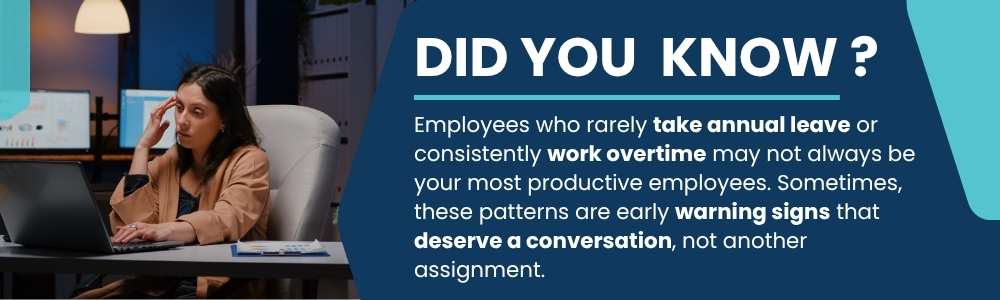
Instead of taking time off, they continue working without breaks or vacations for months. While this might appear productive, consistently avoiding leave can also contribute to workplace burnout.
With employee burnout software, HR teams can review leave trends across departments and identify unusual patterns before they become larger problems.
Rather than questioning employees, these insights encourage supportive conversations about workload and wellbeing.
2. Declining Productivity
One difficult week doesn't necessarily signal burnout. Everyone experiences periods when performance fluctuates. The concern begins when consistent, long-term declines appear.
Employees who previously delivered work on time may begin missing deadlines, making more mistakes, or struggling to complete routine tasks. Without workforce data, these changes are often attributed to poor performance.
However, when productivity trends are viewed alongside attendance records, overtime, and leave history through HR workforce software, HR gains a more complete understanding of what may happen.
The focus shifts from asking, "Why is performance dropping?" to "How can we support this employee?"
That small shift in perspective can make a significant difference.
3. Overtime: At What Cost?
Overtime is sometimes unavoidable.
Product launches, seasonal demand, or urgent client requirements may require employees to work additional hours. The problem begins when overtime becomes the expectation rather than the exception.
Employees who consistently work late nights or weekends often appear highly committed. Sustained overtime without enough recovery time can increase the risk of employee burnout.
This is why organizations should monitor overtime trends instead of celebrating long working hours.
Using employee burnout software, HR teams can identify:
- Employees work excessively overtime.
- Departments experiencing prolonged workload pressure.
- Managers whose teams regularly exceed expected working hours.
- Projects that consistently require extended schedules.
These insights help organizations redistribute workloads before exhaustion becomes the norm.
4. Rising Employee Turnover Within Specific Teams
When talented employees begin leaving the same department, HR should ask an important question.
Is this simply a coincidence, or is there an underlying workplace issue?
High employee turnover doesn't always indicate burnout, but recurring resignations within one team can point toward problems such as unrealistic workloads, ineffective leadership, or poor work-life balance.
Instead of viewing resignations as isolated events, modern HR workforce software helps identify trends over time.
For example, HR may discover that:
- One department record significantly higher turnover than the others.
- Employees under a specific manager leave more frequently.
- Teams with the highest overtime also experience the highest resignation rates.
These insights allow HR to investigate workplace conditions before more employees decide to leave.
Reducing employee turnover isn't just about hiring replacements. It's about understanding why people live in the first place and creating an environment where they want to stay.
5. Behavioral Changes That Often Go Unnoticed
Sometimes the earliest signs of burnout aren't found in reports or dashboards. They're seen in everyday behaviors.
An employee who was once enthusiastic may become unusually quiet during meetings. Someone who collaborated with colleagues might begin working in isolation.
Others may seem impatient, disengaged, or less interested in contributing to new ideas. These behavioral changes are easy to overlook when everyone is busy.
When combined with workforce data such as attendance, overtime, leave history, and performance trends, they provide HR with valuable context for meaningful conversations rather than assumptions.
Technology cannot replace empathy, but it can help HR notice when someone may need support before the situation becomes more serious.
Managers Watching Every Tiny Thing: The Biggest Problem
One of the biggest misconceptions about tackling burnout is believing that employees simply need to work harder or that managers need to keep a closer eye on every task.
Constant monitoring often has the opposite effect.
Imagine an employee receiving messages after work hours asking for status updates, being questioned about every break, or feeling the need to explain every hour of their day. Even if the intention is to improve productivity, this kind of micromanagement can create unnecessary pressure and reduce trust.
Employees begin to feel that they are being watched instead of supported.
Over time, this environment can contribute to workplace burnout, lower morale, and even higher employee turnover.
This is why organizations should avoid confusing visibility with surveillance.
Good HR practices are built on understanding trends, not tracking every click or minute. The purpose of employee burnout software is not to monitor employees constantly. Instead, it helps HR and managers identify patterns that indicate someone may need support.
When used responsibly, workforce data encourages healthier conversations rather than creating additional stress.
Solve the Tension with Employee Burnout Software
Burnout rarely happens because of a single event. It usually develops over weeks or months through increasing workloads, skipped breaks, excessive overtime, lack of recognition, and ongoing pressure.
The challenge for HR is that these warning signs are often spread across different systems, which is why HR process automation helps organizations connect important employee information.
Attendance records might show one pattern, leave data another, while performance reviews reveal something entirely different.
Without bringing these pieces together, it becomes difficult to see the bigger picture.
This is where employee burnout software makes a meaningful difference.
Instead of relying on assumptions, it brings workforce information into one centralized platform, allowing HR to identify trends that deserve attention.
Rather than asking, "Who isn't performing?" HR can begin asking, "What is happening, and how can we help?"
That shift changes the conversation from performance management to employee wellbeing.

How Employee Burnout Software Helps HR Make Better Decisions
An effective employee burnout software solution doesn't diagnose burnout or replace human judgement. Instead, it gives HR the information needed to make informed decisions. Some of the ways it supports organizations.
Attendance Trends
Repeated late arrivals, irregular attendance, or changing work patterns may indicate that an employee is struggling.
When attendance data is reviewed over time, HR can identify patterns that deserve a conversation rather than assuming poor commitment.
Leave Management
Leave records tell an important story. Some employees begin taking frequent unplanned leave, while others avoid taking any leave at all.
Both situations can be early indicators of employee burnout. By reviewing leave balances and usage trends, HR can encourage employees to take adequate time to rest and recover.
Timesheet Analysis
Timesheets provide valuable insights into workload distribution. Employees consistently logging long hours, working weekends, or recording extended overtime may require additional support.
Instead of rewarding excessive working hours, organizations can identify opportunities to rebalance workloads across teams.
Performance Trends
Performance reviews become more meaningful when viewed alongside attendance, overtime, and leave information. If a previously high-performing employee begins missing targets after months of excessive workload, HR gains valuable context before making performance-related decisions.
Reports and Analytics
One of the greatest strengths of HR workforce software is the ability to transform everyday workforce data into actionable insights using the HR analytics strategies.
Interactive dashboards and reports help HR identify:
- Departments experiencing prolonged overtime
- Teams with increasing absenteeism
- Employees who rarely use annual leave
- Patterns linked to rising employee turnover
- Workforce trends across locations and business units
Instead of reacting after problems become visible, organizations can take preventive action much earlier.
Your Employees Shouldn't Have to Reach Breaking Point Before HR Notices
Burnout doesn't happen overnight, and neither should the response.
Every attendance record, leave request, overtime hour, timesheet, performance review, and employee life cycle event tells part of the story. When these insights are brought together, HR teams can recognize patterns earlier, support employees more effectively, and create a healthier workplace for everyone.
HR HUB helps organizations do exactly that.
With centralized workforce data, intelligent reports, attendance tracking, leave management, timesheets, performance management, and employee life cycle management, HR HUB empowers businesses to identify potential burnout risks while improving employee wellbeing, productivity, and retention.
Because the best workplaces don't just measure performance.
They care for the people behind it.