A new employee's relationship with a company does not begin on the first working day.
It often begins much earlier, when they receive an offer, communicate with HR, submit documents, learn about their role, and start forming expectations about their new workplace.
That makes the transition from candidate to employee an important part of employee experience.
A candidate may have had a smooth interview process, but what happens after they accept the offer can tell them a lot about the organization. If emails are missed, documents are requested repeatedly, managers are not prepared, or the new hire has no idea what to do next, the experience can quickly become confusing.
On the other hand, a clear and organized start can help a new employee feel prepared and supported.
This is where recruitment of onboarding software can help. It connects recruitment information with the activities that need to happen before and after an employee joins, giving HR, managers, and new hires a clearer process to follow.
It cannot determine whether someone will stay with a company for years. What it can do is remove avoidable administrative friction and create a more consistent beginning to the employee journey.
Hiring Ends with Selection, not with the Employee Journey
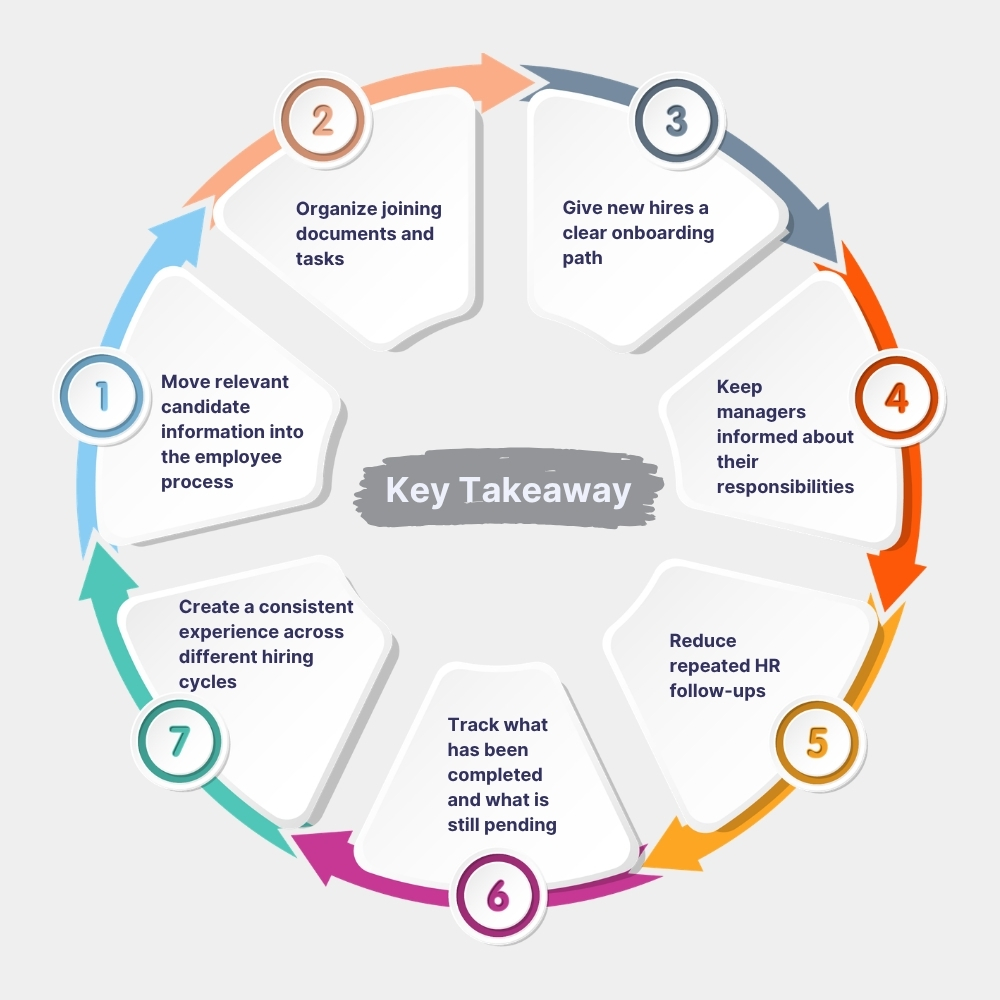
Recruitment has a clear objective: find and select the right candidate. But accepting an offer creates a new set of responsibilities. The employee needs to know when and where to report, what documents are required, who their manager is, what their role involves, and what they should complete before or after joining.
This is where employee onboarding software becomes useful.
Instead of treating the offer of acceptance as the final recruitment step, HR can use it as the point where a structured onboarding process begins.
The difference may seem small, but it changes how the organization manages the transition.
The recruitment team already has information about the candidate. HR should not have to rebuild that information from scratch simply because the person's status has changed.
A connected process allows relevant information to move forward while giving HR the opportunity to review and complete anything that is still missing.
Common Gaps Between Recruitment and Joining
The gap between accepting an offer and starting work is where many small problems can arise.
A candidate may accept an offer, but the onboarding checklist has not been prepared. Documents may be collected through email. A manager may not know when the new employee is starting. HR may be waiting for information from another team.
These are not always major failures. They are usually coordination problems.
New hire onboarding software can help make responsibilities more visible before the employee arrives. HR can define what needs to happen, assign tasks, collect required information, and track what remains incomplete.
For example, before the joining date, the organization may need to:
- Collect required documents
- Confirm joining details
- Prepare employee information
- Assign onboarding tasks
- Notify the reporting manager
- Complete approvals
- Prepare workplace or system access
- Share first-day information
Onboarding automation software can help organize these steps so routine actions do not depend entirely on someone remembering to send an email or update a spreadsheet.
That does not mean every part of onboarding should be automated. A welcome conversation with a manager, a team introduction, or a thoughtful check-in still benefits human involvement.
What New Employees Need During Their First Days
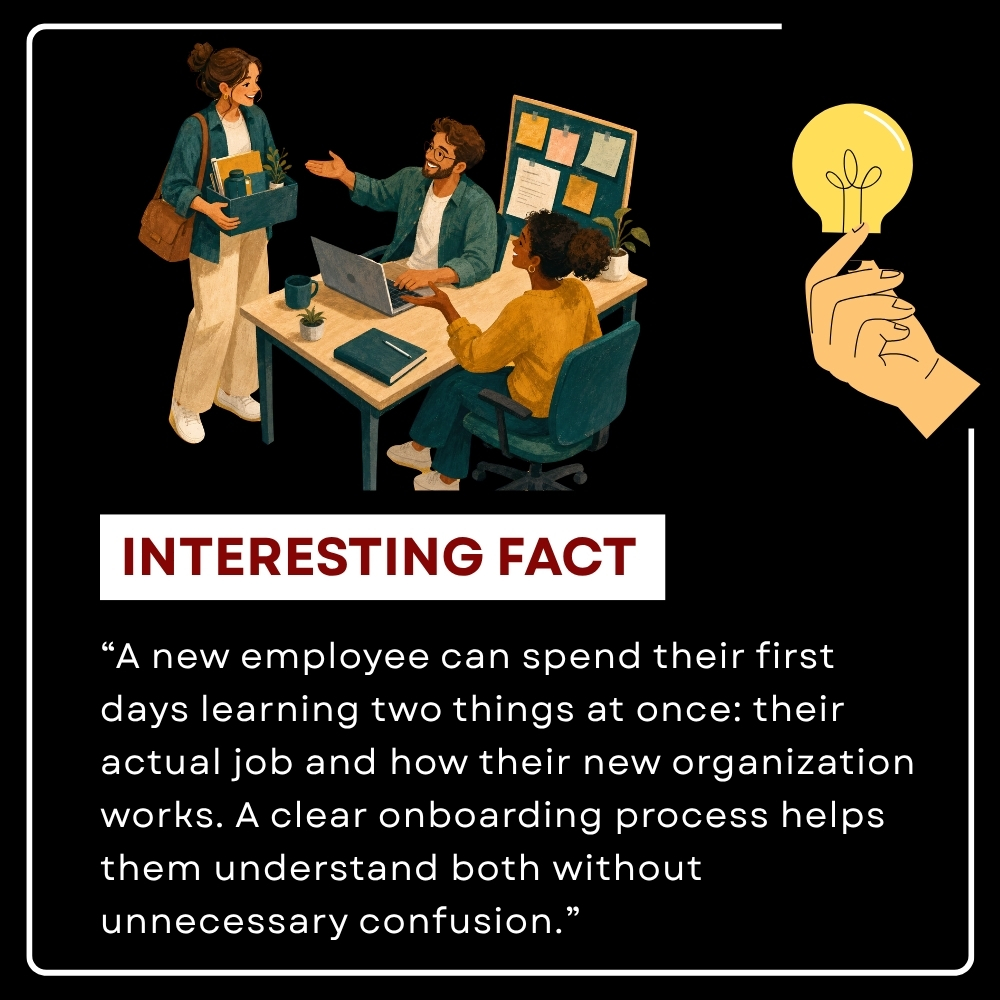
The first few days can be information heavy. A new employee may need to understand the company's policies, role expectations, reporting structure, working hours, communication channels, documents, and internal processes.
They also need to know where to ask for help.
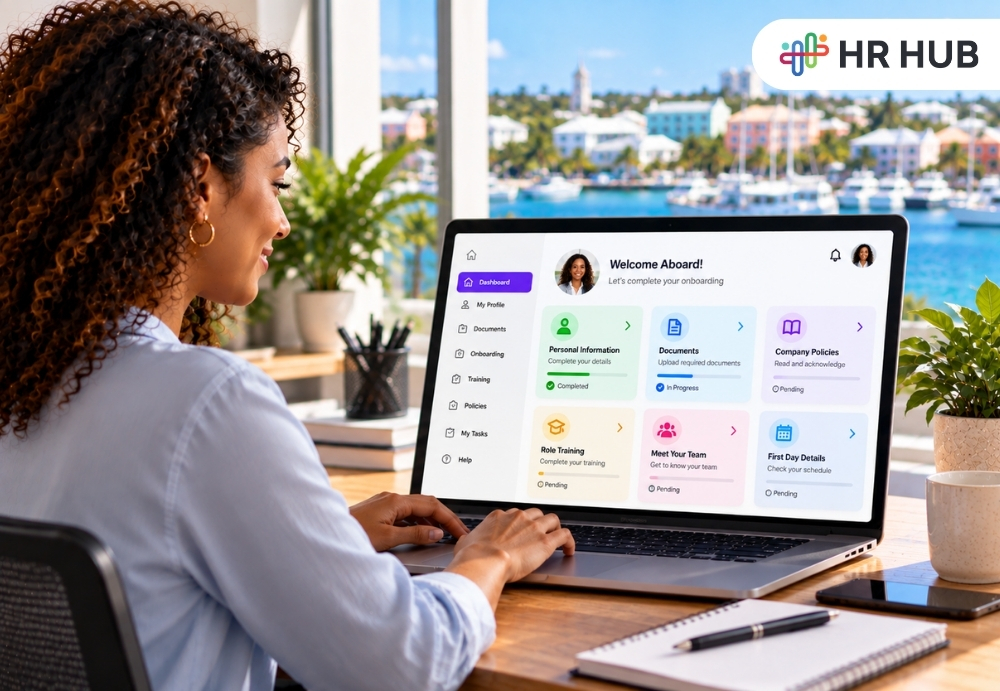
A digital onboarding platform can give new employees a clearer place to find approved information and complete required tasks. Instead of receiving several unrelated emails, they can follow a structured onboarding journey. This can include:
- Personal and employment information
- Required documents
- Company policies
- Joining instructions
- Assigned onboarding activities
- Important contacts
- Manager-related information
- Forms and acknowledgements
Employee onboarding software can also help HR keep track of what the employee has completed and what still requires attention.
That visibility matters because onboarding is not only about giving information. It is also about knowing whether the employee has received and completed what they need.
A new hire should not have to repeatedly ask, "What do I need to do next?"
New hire onboarding software can make that next step more visible.
Connecting the Candidate Experience to the Employee Experience
The recruitment process already contains information that can be useful after joining.
Candidate details, selected position, department, experience, interview information, offer details, and other relevant records may already exist.
When recruitment and onboarding operate separately, HR may have to enter the same information again. Recruitment onboarding software can help connect these stages so approved information can move into the employee management process.
This matters more than saving data entry.
It helps create continuity.
The person who was evaluated during recruitment becomes the same person whose employee record is being prepared for onboarding. The transition becomes easier to follow for HR and less repetitive for the employee.
Employee onboarding software can support this handoff by making the information available at the right stage while allowing HR to review and confirm what should become part of the employee's record.
Mobile Experience Can Make Onboarding Easier
New employees do not always have access to their work computer immediately. Some may be traveling before their joining date. Others may need to complete information from home before arriving at the workplace. A digital onboarding platform with mobile access can make selected onboarding activities available from a phone. This can be useful for:
- Reading joining instructions
- Completing basic information
- Receiving notifications
- Checking assigned tasks
- Accessing approved documents
- Staying informed about onboarding activities
This is where a mobile-first HR experience can complement recruitment of onboarding software rather than becoming a separate process. The employee gets access to relevant information when needed, while HR retains control over the underlying workflow.
How Recruitment Onboarding Software Connects Hiring and Employee Management
The strongest connection happens when recruitment, candidate management, and onboarding are treated as part of one employee journey.
Recruitment identifies and selects the candidate.
Candidate management keeps relevant information organized.
Onboarding prepares the person to join.
Employee management maintains the relationship after joining.
Recruitment onboarding software can connect these stages through structured workflows.
Candidate selected
↓
Offer accepted
↓
Onboarding initiated
↓
Documents collected
↓
Employee information prepared
↓
Manager tasks assigned
↓
Joining completed
↓
Employee record activated
This approach gives HR a clearer view of where each new hire stands. Onboarding automation software can also help trigger routine tasks at the appropriate point. A completed offer of acceptance may start an onboarding workflow. A submitted document may move a task forward. A completed onboarding step may notify the relevant person.
The exact workflow will depend on the organization's processes and approval rules.
The purpose is not automation for its own sake. It is to make the handoff between people and processes easier to manage.
How a Better Onboarding Process Supports Long-Term Engagement
A good onboarding process cannot control every factor that affects whether an employee stays with an organization.
It can, though, influence early experience. Employees want to know what is expected of them, where to find information, who to approach, and what happens next.
When these basics are unclear, unnecessary frustration can appear early.
When they are organized, employees have a clearer starting point.
Recruitment onboarding software can help create this consistency across departments and joining cycles, so each new hire follows the required process without HR having to rebuild the workflow each time.
Onboarding automation software can support reminders and routine coordination, while HR and managers remain responsible for meaningful conversations. This combination matters. The system handles repeatable work. People handle relationships.
What Should Businesses Look for in Recruitment Onboarding Software?
Businesses comparing recruitment onboarding software should look beyond whether a platform has a basic onboarding checklist. The more useful questions are:
- Can candidate information move into onboarding without unnecessary re-entry?
- Can HR collect and manage the required documents?
- Can managers receive and complete their onboarding tasks?
- Can new employees see what they need to complete?
- Can HR track onboarding progress?
- Can workflows and approvals be configured?
- Can onboarding connect with employee information after joining?
- Can the system support the organization as the employee's journey continues?
Employee onboarding software becomes more useful when it is connected to the broader HR environment rather than operating as an isolated checklist.
A digital onboarding platform should also provide appropriate access controls because onboarding involves personal and employment-related information.
Connecting Recruitment, Onboarding and Everyday HR With HR HUB APP
A new employee's first experience should not depend on how many emails HR remembers to send.
HR HUB APP connects recruitment and onboarding processes so organizations can manage candidate information, onboarding activities, employee information, documents, workflows, and related HR processes in one environment.
HR HUB Recruitment Software supports recruitment and candidate management, while Onboarding Software helps organize the transition from selected candidate to employee.
The mobile HR experience can also give employees a convenient way to stay connected with relevant HR information and tasks beyond the desktop.
The aim is straightforward making the administrative side of joining organized enough that HR and managers can focus on helping a new employee feel like part of the team.
Frequently Asked Questions
1. What is recruitment onboarding software?
Recruitment onboarding software connects recruitment and onboarding activities so relevant candidate information can move into the employee onboarding process. It can help manage documents, tasks, approvals, workflows, and joining activities.
2. What is the difference between employee onboarding software and recruitment onboarding software?
Employee onboarding software focuses primarily on bringing a selected candidate into the organization. Recruitment onboarding software connects that process more closely with recruitment and candidate information, helping reduce gaps between selection and joining.
3. How does new hire onboarding software improve the employee experience?
New hire onboarding software can give employees clearer instructions, organized documents, visible tasks, and a defined path through their first days. This can reduce confusion and repetitive follow-ups.
4. Can onboarding automation software replace HR?
No. Onboarding automation software can automate or organize routine tasks, reminders, notifications, and workflows, but HR and managers still need to handle communication, relationship building, role expectations, and situations requiring judgment.
5. What should a digital onboarding platform include?
Useful capabilities can include employee information capture, document collection, onboarding checklists, workflows, approvals, notifications, task tracking, manager participation, and connection with employee records.
6. Is employee onboarding software useful for growing companies?
It can be particularly useful when hiring volume increases because HR has to coordinate more new employees, documents, managers, and tasks. A consistent process can reduce dependence on manual follow-ups.
7. Can recruitment and onboarding be connected in one HR system?
Yes. When recruitment and onboarding are connected, approved candidate information can be carried into the onboarding process, reducing duplicate data entry and creating a more continuous transition from candidate to employee.