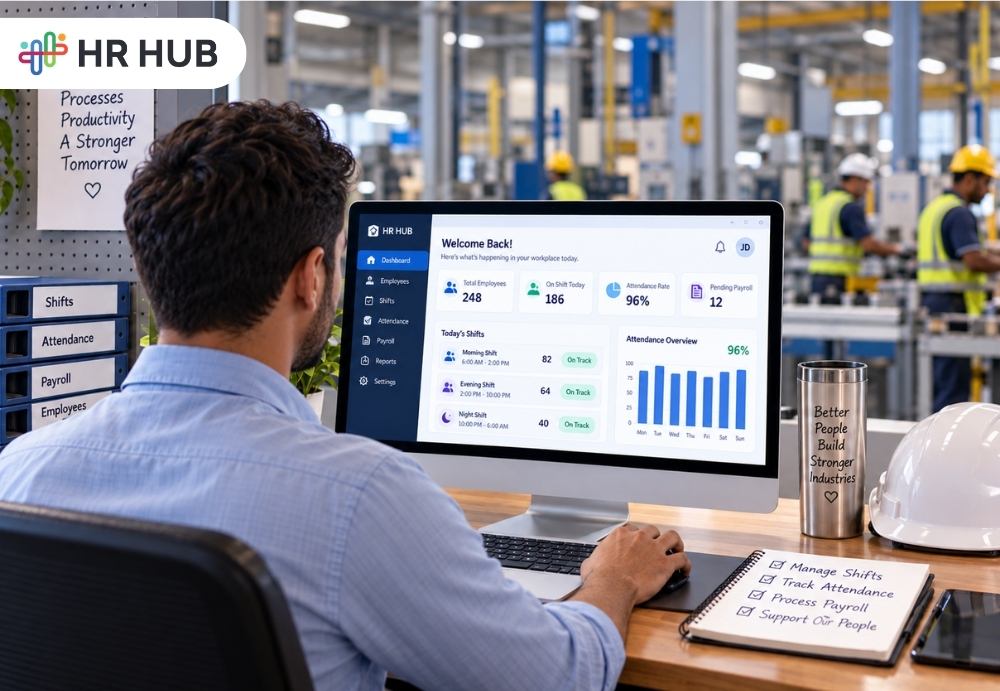
Manufacturing HR works differently from office-based HR.
In a typical office environment, most employees follow similar working hours, sit in the same location, and have predictable attendance patterns.
A factory workforce operates differently.
One production unit may run morning, evening, and night shifts. Another department may follow different schedules. Some employees may work overtime during production demand. Some workers may be assigned to different lines, machines, or locations. Attendance may be captured through biometric devices, while payroll depends on the accuracy of working hours.
This creates a simple but important challenge:
The shift an employee is assigned, the attendance they record, and the payroll they receive must tell the same story.
When these processes work separately, even a small mismatch can create bigger issues. An employee may work an approved shift but appear late because attendance is using an outdated schedule.
A supervisor may approve overtime, but payroll may not receive the correct hours.
HR may have attendance data but struggle to understand workforce availability across departments. This is why HR software for manufacturing companies needs to connect shifts, attendance, and payroll into one connected workforce process.
The goal is not only automation. It is creating a reliable connection between planned work, actual attendance, and accurate salary processing.
Why Manufacturing HR Software Requires a Different Approach
Manufacturing organizations often manage a workforce that is spread across production lines, departments, shifts, and locations. A factory may have:
- Production operators
- Machine technicians
- Quality teams
- Maintenance employees
- Supervisors
- Warehouse staff
- Administrative employees
Each group may follow different working patterns. Production workers may rotate between shifts. Maintenance teams may support multiple time windows. Supervisors may have different schedules from operators. Contract workers may follow separate attendance rules.
Managing this manually creates challenges because HR is not only maintaining employee records. They are managing daily workforce movements. This is where manufacturing workforce management becomes important. The business needs visibility into:
Who is working today?
Which shift are they assigned to?
Which department are they supporting?
How many hours did they complete?
Are overtime hours approved?
Will payroll receive accurate information?
Without connected systems, HR teams often spend time comparing different files instead of managing workforce operations.
Why Shift Management Is the Starting Point
Manufacturing operations depend heavily on schedules. Unlike a standard office environment, production cannot always stop when employees finish a fixed working day. Factories often operate multiple shift, rotational schedules, weekend production, extended production hours, and emergency coverage
A shift assignment is not just a timetable. It defines when an employee is expected to work and provides a reference point for attendance and payroll.
For example:
An employee is assigned a night shift from 10 PM to 6 AM. If attendance is still configured for a day shift, the employee may appear absent or late even when they reported correctly.
The issue is not the employee.
The issue is that the schedule and attendance system are not connected.
This is where manufacturing HR software becomes valuable.
A connected system allows HR and managers to maintain accurate shift information that can support attendance tracking and payroll processing.
Role of Biometric Attendance in Manufacturing
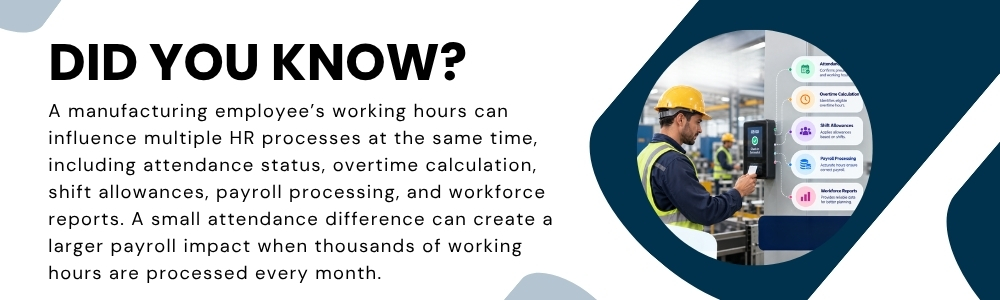
Many factories use biometric devices because they provide a practical way to capture attendance for large workforces. Employees clock in and out using fingerprints, face recognition, or other biometric methods. However, attendance capture alone is not enough.
The real question is: What happens after attendance is recorded?
A biometric punch only tells the system when an employee enters or leaves. HR still needs to understand:
Was the employee scheduled for that shift?
Was the late arrival approved?
Did the employee complete overtime?
Was the employee working on a holiday?
Does attendance affect payroll?
This is where factory attendance software plays an important role. When attendance data connects with employee schedules and payroll rules, HR can move from simply collecting punches to understanding workforce time accurately.
When Attendance and Shifts Are Not Connected
Many attendance problems are actually scheduling problems. Consider this example:
A supervisor changes an employee’s shift from morning to evening because production demand increases. The employee reports according to the updated schedule. However, the attendance system still expects the original morning shift.
The employee may now appear late.
HR investigates.
The supervisor explains the change.
The attendance record is corrected manually.
This process may seem manageable for one employee.
For hundreds or thousands of workers, repeated corrections consume significant HR time. A connected factory attendance software approach reduces these situations by ensuring that attendance evaluation is based on the correct employee schedule.
Overtime Requires Accurate Workforce Data
Overtime is common in manufacturing, especially during production deadlines, seasonal demand, urgent orders, or machine-related requirements. But overtime calculations depend on accurate information. HR needs to know:
- Scheduled working hours
- Actual working hours
- Approved overtime
- Shift timing
- Weekly offs
- Holidays
If shift data, attendance records, and payroll calculations are managed separately, overtime verification becomes difficult. This is why manufacturing payroll software should not operate independently from attendance and shift management.
Payroll needs reliable input. Those inputs come from accurate workforce records. A connected HR system helps ensure that employees are paid based on verified working information rather than manual calculations from multiple sources.
Managing Different Employee Categories
Manufacturing companies rarely have only one type of employee. A factory may include:
- Permanent employees
- Temporary workers
- Contract workers
- Shift-based operators
- Supervisors
- Office staff
Each category may have different rules related to attendance, working hours, overtime, leave, and payroll.
A centralized HR approach helps maintain employee information while allowing businesses to apply the correct rules based on role, department, or employment category.
This is another reason why HR software for manufacturing companies needs flexibility. The system should understand that every employee contributes differently to operations.
Leave and Absenteeism Affect Production Planning
In manufacturing, an absent employee can affect attendance records more than attendance records.
A missing operator may delay production. A shortage of technicians may affect maintenance schedules. Unexpected absences may require supervisors to arrange replacements. Leave management therefore connects directly with workforce planning.
When leave information is available alongside attendance and shift schedules, managers can better understand workforce availability. They can identify:
Who is unavailable?
Which shifts need coverage?
Which departments have staffing gaps?
Where are replacements required?
This improves manufacturing workforce management because decisions are based on current workforce information rather than separate records.
Centralized Employee Information Creates Better Visibility
Manufacturing HR teams manage large amounts of employee information. This includes:
- Employee profiles
- Employment documents
- Department details
- Shift assignments
- Attendance records
- Leave history
- Payroll information
When this information exists across different systems or spreadsheets, HR spends more time collecting information.
A centralized HR system creates one employee record where important workforce information can be maintained together. This allows HR and managers to answer important questions faster:
Who works in this department?
Which shift are they assigned to?
What is their attendance history?
What payroll information applies to?
This level of visibility supports better daily decision-making.
What Should HR Software Manufacturing Companies Connect?
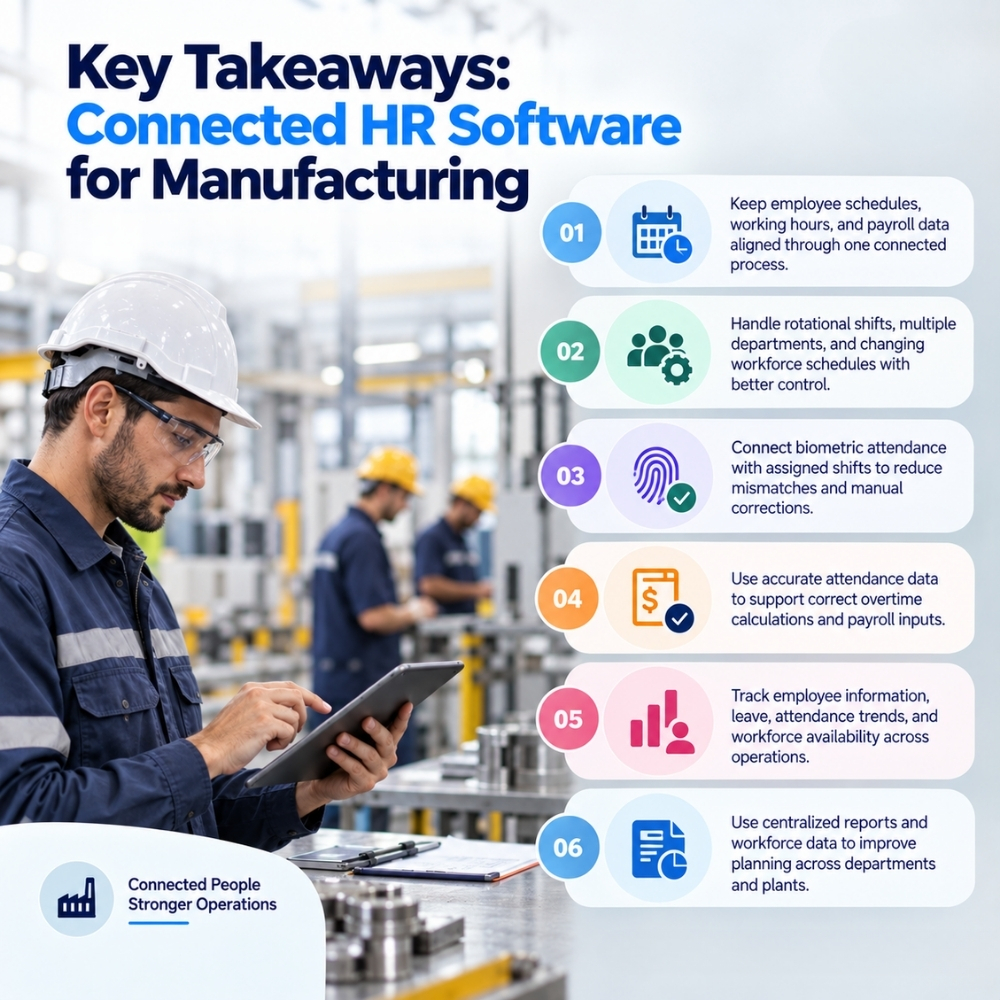
A useful manufacturing HR system should not treat every HR process as a separate activity. The strongest value comes when different workforce processes support each other. Important connections include:
Shift Management + Attendance
Employees should be evaluated based on their assigned working schedule.
Attendance + Payroll
Verified working hours should flow into payroll calculations.
Employee Information + Workforce Planning
HR should have accurate employee records when planning staffing requirements.
Leave + Scheduling
Managers should understand employee availability before assigning shifts.
Reports + Decision Making
Leadership should have visibility in workforce trends across departments and locations.
This connected approach is what separates basic records from effective manufacturing workforce management.
Connect Your Manufacturing Workforce With HR HUB
Manufacturing businesses need more than separate systems for employee records, shifts, attendance, and payroll.
They need connected workforce processes that help HR understand what is planned, what happened, and how it impacts payroll.
HR HUB helps manufacturing organizations manage Employee Information, Shift Management, Attendance, Biometric Integration, Leave, Payroll, and Reports through one connected HR system.
For businesses managing production teams, multiple shifts, and large workforces, HR HUB helps create better visibility across the complete employee journey.
Because in manufacturing, keeping people, schedules, attendance, and payroll connected is essential for keeping operations moving.
Frequently Asked Questions
1. Why do manufacturing companies need HR software?
Manufacturing companies manage shift-based employees, attendance tracking, overtime, leave, and payroll calculations. HR software helps connect these processes and maintain accurate workforce records.
2. How does HR software help with factory attendance management?
HR software can connect employee schedules with attendance records, helping businesses track working hours, overtime, absences, and shift attendance more accurately.
3. Can HR software integrate with biometric attendance systems?
Many HR systems support biometric attendance integration, allowing employee punch data to relate to attendance processing and workforce reports.
4. Why should manufacturing payroll connect with attendance?
Payroll depends on accurate working hours, overtime, and attendance information. Connecting these systems reduces manual calculations and payroll errors.
5. How does manufacturing HR software improve workforce visibility?
It provides centralized access to employee records, shift schedules, attendance information, leave data, and reports, helping HR and managers make better workforce decisions.